The biggest challenge is how to move forward

Coming from the Fermentation Training Camp, where I met inspiring people that I want to be like someday, and learning about this new perspective and approach towards processing coffee made me think. Ok.... so what should I do now.

But prior to coming here, I knew that I needed to learn processing so that I could use resources around me, being working in a farm, to apply what I learn in Colombia, but in small scale. And so, that came with the mission to know what I need and to know how to start. Lucia was already there so might as well ask!
The result is? As I get back to Kona, and the farm, I grab my car and grab yeast by the coffee research lab by the island. My stuff from amazon was arriving. As soon as it did, I went and started picking cherries, doing the process, the yeast, tracking data, and drying.
A day after I got to Kona, I wanted to share some experience to a friend who said he wanted to hear about it!
We ended up talking for a few minutes till I was invited for a freakin competition. I was like woah. A great way to let my voice be heard, and so I impulsively registered.
The trip made it feel like I have a greater mission somewhere. I was just left wondering how can I apply what I learned?? And in addition to that, Lucia recommended to me to learn Spanish. It's a great way to get involved with more producers. And so I took her contact, and had a class the next weekday after I got back.
Too much on my plate. Competition, experimenting, spanish lessons!
I just have to find growth somewhere while being in the farm. UUUUUGH. My head is screaming. But yea. Had to let go of Spanish lessons till the next 2 weeks after competition cause I had to focus. I was running out of time.
I compete tomorrow, and that's a different story. So atleast I'm getting something done. Someway, somewhere, somehow.
Right? Right.
Everyday is challenging but oh well. We got this.
Why I chase for education. Hmm?
Years of experience. This is something that I don't have control over, despite the passion and persistence to learn. Quite suckish is that I look like a child for some cause am asian (we know how Filipinos work with that) and sometimes am not taken seriously with my ambitiousness.
So….how can I gain credibility and proper knowledge, the fastest way I know?
Being in my early 20's, people tell me, learn how to save as early as now. The constraint being time and money, I had to choose which is more valuable. It's time. It's time because I can use the little money I have to save for education for my next step.
If I can learn from people who has dedicated years to collectively learn a specialized side in coffee, a.k.a finding mentors for every aspect of it, it is to my greater advantage to have that head start and to apply it myself, and just go from there.
If I need to buy equipment that is necessary for self learning or experimenting, I will definitely put that as priority to acquire, to have better understanding of a topic. Should I have a reason for traveling, it has to be related to learning something in coffee.
If I invest my money on the time I am learning coffee, I know that I’ll be able to save (labor wise) in whatever business I choose to do in the future, and that I can say that I can trust myself on this aspect.
Education is my investment, to add value for the time I spend to gain credibility as quick as I could. I may be young, but if I could learn correctly throughout the process of understanding the chain, I could achieve more, so that one day I could bring myself to educate, to have greater impact, and to give more.
Panama is my Disneyland
A trip to Boquete, in Panama is one I'll never forget. It was Disneyland for an aspiring coffee professional like myself!
Planning to attend a fermentation workshop, hosted by Lucia, me and my partner, Mike decided to visit Panama as it was on the way anyways.
Prior to coming, one of the connections I have in Kona, Pepe, connected me to his brother Jorge, to welcome me in Boquete. Just before flying, I was warned that rallies towards the government have been on going.
1 day in the city, as we went around Casco Viejo, explored some coffee shops around.
Yes indeed, Geishas are on the menu, and a trip to the Panama Canal. On that one day stay, we saw people gathering by the President's house. The next morning, an after before we let for the airport, the roads were then blocked!
We arrived at Boquete, and Jorge greeted us. I was linked to Pepe's cousin, Manuel as he hosts an airbnb very close by the town, where so many great cafes and food places are around.
Jorge basically gave us his day to take us around the area. We were able to enter this place where The Best of Panama is hosted. We got to meet Panchy, one of the region's producers, and I was able to have a good conversation on his strategy for selling coffee. Selling coffee cherries to Katowa, one of the most common cafes around is one of em. Worth more of his time and money.
Next stop, we went to La Finca Esmeralda. While I was doing my research on best farms in the area, this company appeared in one of the blogs I've been reading. I learned that they don't do tours. And so, I was so excited when I saw a sign on where we were heading to next!
We drove to one of their properties to visit Poncho, the farm manager and the one who discovered the Geisha Variety! To actually meet the person who was a part of why Panama is very much known for specialty was an absolute honor. We stopped by their house, and together with his wife, Mitilda, they greeted us with so much hospitality. Jorge was joking about maybe brewing us some coffee. We ended up staying for a sandwich and a coffee that they themselves fire roasted, and brewed by a sock filter. We talked story while Jorge kindly translated from Spanish to English.
That afternoon, Jorge and his son, showed us around the province and we had really good dinner by the mountain.
Staying in Boquete was quite a strategy so that we can visit other regions around it. However, with the strike, we were afraid that we wouldn't be able to get back to our place, and so we stayed around the area
Going around the province was really lovely. However, with this region being known for specialty coffee, I knew I had to get into one of the farm tours. The next day, we went to Finca Lerida a 50 hectare farm. There are many specialty coffee farms to choose from. I'd say that this farm has exceeded my expectations. Our tour guide, Caesar was very much knowledgable about the farm, being part of the team for more than 10 years! We had a tour around, cupped coffee. was given some natural cascara to take away, and a coffee & cake at the end. With so much I've learned in that first part of the day, I'd say I was very much content already!
Going back from the farm to town, we stopped by in coffee shops too. Both cafe Ruiz and Berlina Estate served good coffee, but the conversation I had with two Baristas, Marvin and Eric, from Berlina Estate Coffee gave me a really good insight. Learning that the locals of this region, love, serve and know the value of their own coffee is a refreshing encounter.
The next day, the strikes have gotten worse, to the point that gas stations have been ordered to close. We rented a car, but it was of no use because we couldn't go around.
As we stayed by the town, me and Mike went around. One more reason why I love Boquete so much is because of the local chocolate stores. Can you imagine? A province that have shops that serves bonbons or truffles? A 3 minute walk from home to get truffles. The Perfect Pair and Katowa chocolate was such a convenient grab and go for us. I just couldn't resist. These were of really high quality too! The freaking hot chocolate was to die for. I had to take 2 packs with me.
I am a very simple human whose eyes light up with great coffee, chocolate and a comforting hospitality experience. I’m really grateful for those people I’ve connected with in this experience. Definitely a memorable one because of such encounters. I'd say Boquete is my happy place. It's my Disneyland. I'll be back!
*We left early at 7am for our flight to Medellin, before roads got blocked.
Luxury in the convenience of good coffee
Two experiences during my Panama-Colombia trip that made my eyes sparkle:

1. In Panama, we grabbed breakfast in Olga's, a regular breakfast cafe by the town of Boquete. I asked for coffee. I didn't expect it to be in that profile that suits my preference. Light roasted with floral fruity notes.

2. In Colombia, on our way to catch a flight from Medellin to Pereira, we were early enough to grab some coffee in the airport. Low and behold, a specialty coffee shop, serving pourovers. The barista did well on my chosen origin. I browsed through their roasted coffee and a roasting date was on label. A freakin roasting date on a coffee producing country, may I add.
These unique instances made me smile. Why?
Drinking good coffee honestly makes me feel rich enough (in happiness terms), and to not make an effort to hunt for good coffee around, is perhaps a beautiful surprise, and for me, a luxury experience that I am not to take for granted!
Literally, coffee is life
On most days I obsess with learning, this is what my routine looks like.
A series of alarms by 4:30am starts ringing. I actually get up at 5am.
5am - Cupping / Sensory
5:30am - Prepare to work in the farm
6am - Leave for work, listen to some good songs
6:10am - I arrive 20 minutes early, and so I listen to a coffee podcast in my car
6:25 am - Stays in the office & greet co workers before 6:30am for clock in.
6:30am till 3pm- Farm work
3pm - Work on my laptop, watch videos or go home, to take a shower then roast
3pm till 10:30 (the in between)- Brew coffee, Read my Standart magazine, analyze my graph or roasting, do some research of anything coffee
Idle time? Talk to my family or friends via FaceTime while having dinner or something like that.
I write this blog as I take my 15 minute morning break from work. There's just no way around it. I have built my life around coffee. Literally, coffee is life! My hobby is my profession, and I'm happy about it. :)
My Purpose in Coffee Tasting
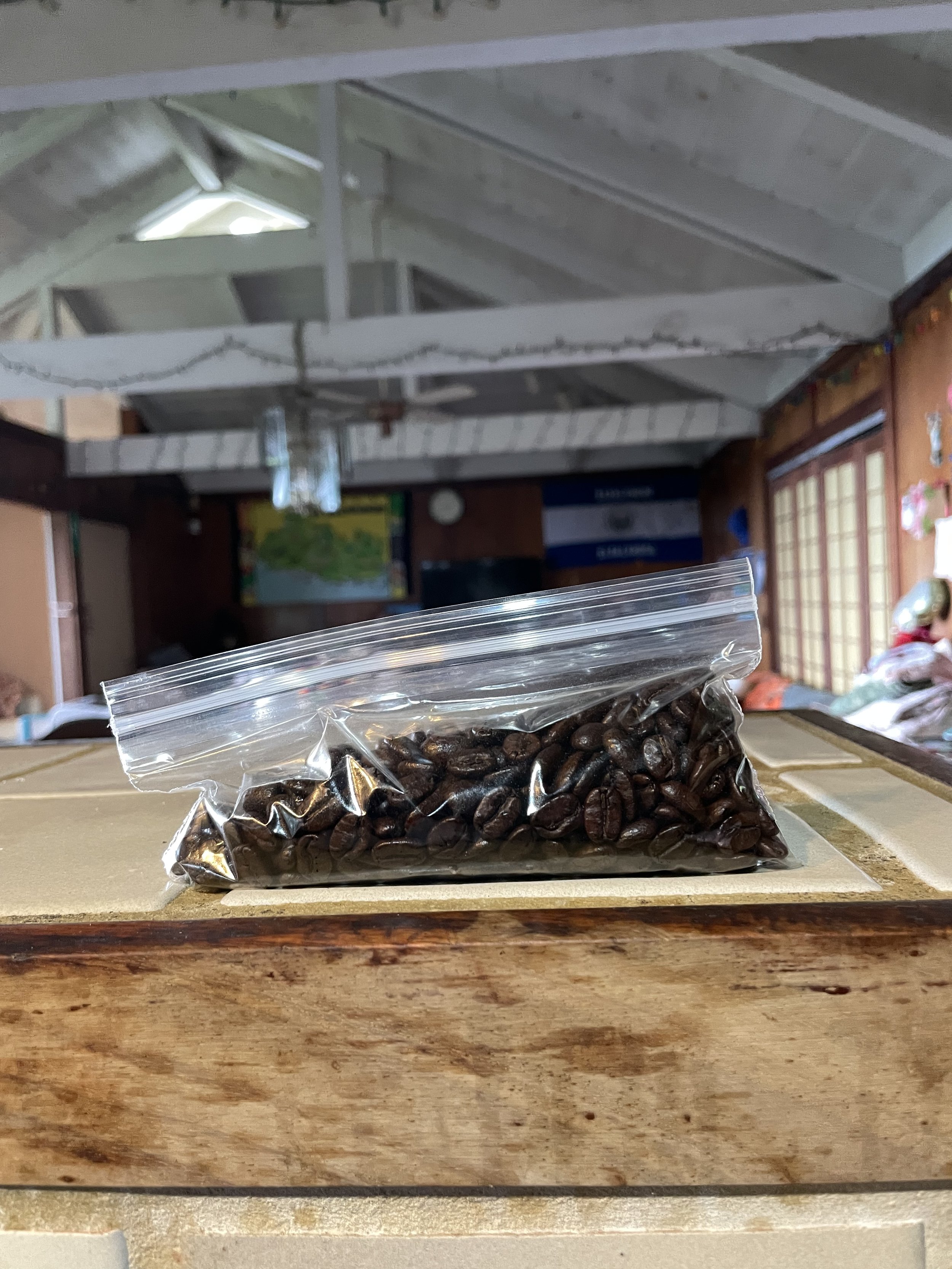
Situation:
Maria, my farm manager comes to the kitchen, with some coffee in a ziplock and says, “Danni, here’s the coffee from —farm. Please tell me what the coffee taste. Roberto wanna know.”
I say, “Oh. Yay! Thank you. Why? Isn’t that coffee from Roberto?”
“Yes. I drink coffee but I don’t know how to taste. You can give me what the flavor is when you test and try”, Maria replied.
I answered “Okay! Will do tomorrow!”, with a smiley face, of course.
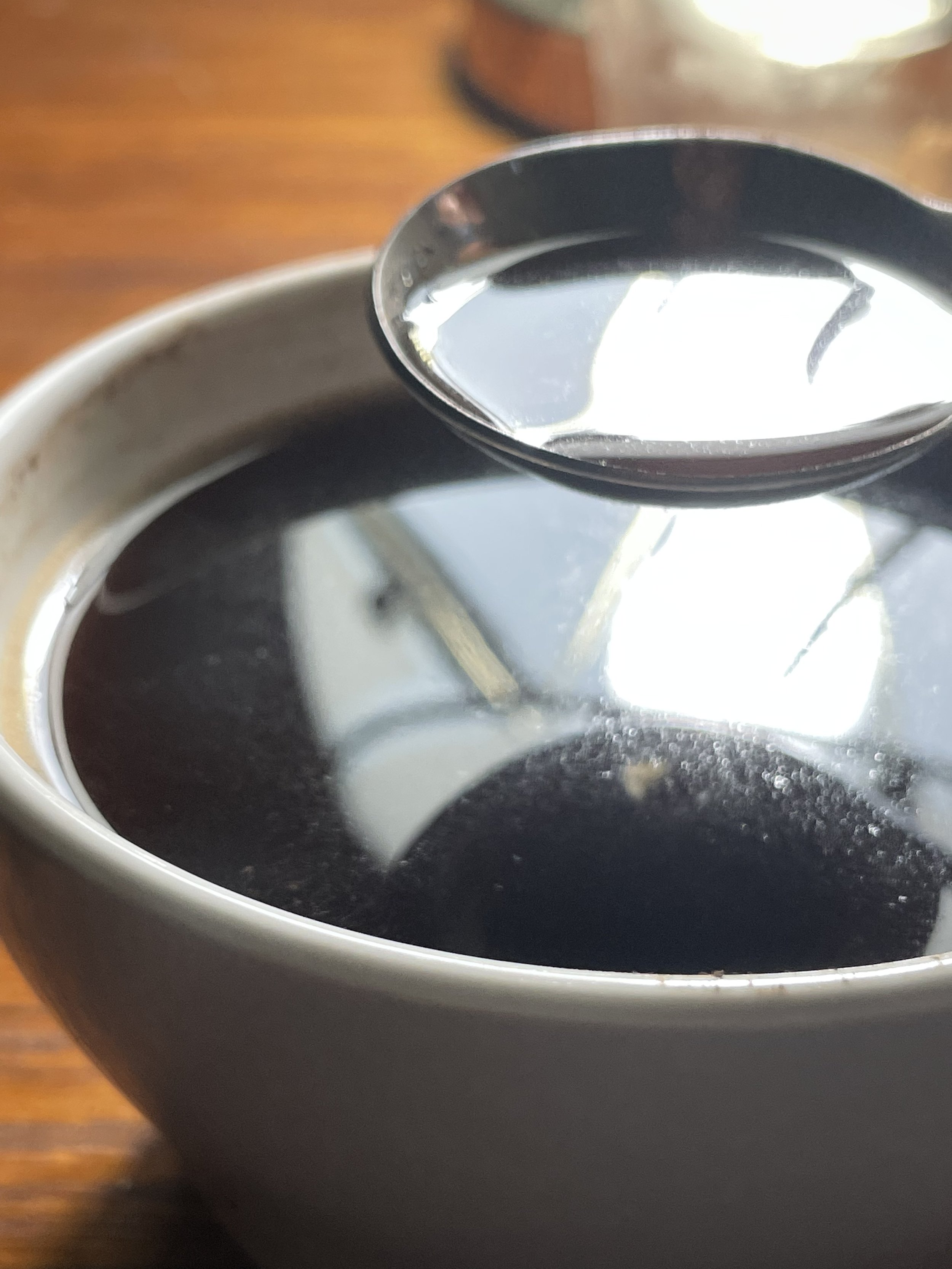
That conversation brought me to realize, that the skill I’m trying to build with learning how to assess coffee, comes very handy. I say I’ll give an answer “tomorrow”, because one of the weekday routines I have is to practice cupping before work, with whatever I roasted, a day or days prior. This is why I’m learning what I’m learning. I use my skill as a tool to give producers that immediate feedback on their product. I mean, sure I’m not yet a licensed taster, but it’s nice to use this kind of education & skill to those who has almost direct control over the coffee. I feel valued as they ask for my opinion too. The more I want to improve with calibrating my sense of taste. More than a license/some certificate to build credentials, it gives me purpose, as I could serve those who need feedback the most.
Educate your producers, a topic on health hazard
Part of the consistent tasks we do on the farm is maintaining our coffee trees, and making sure that the green is healthy for when coffee season starts, we have healthy cherries to pick. With that, comes spraying herbicides and fungicides. There’s so much threat to the crop, that there’s no choice but to keep up with this task twice a month.
This past week, us, the workers have been called to the office to watch a video about handling fungicides or liquid for spraying. It was about 50 minutes in total. In that video, it showed how the liquid may enter your body in ways that can be harmful, protective gear, protocol if something happens, ways to avoid it, and other topics that revolved on how to protect yourself from falling ill by it. At the end, we talked about the system on how to keep track of records, suggestions on what we’re using, and how we can improve our current actions on spraying.
I was stunned by all that information. I was wondering, why do I only know about this now? After 9 months of doing farm work in two farms? Only now??? But at the same time, I was also grateful that someone credible from Department of Agriculture came by to give this presentation & talk.
Before we hold up a fight against any person/company, let me just say that I’ve always been guided in UCC. What to wear, how to protect myself and I’ve been given gear too. My farm manager has done her part and has been compliant with making sure that I’m all set with handling the spray. The only missing part was the detailed “why’s”.
However, I get flashbacks on what it was like in my previous farm as I wasn’t guided at all, because no one was there to properly inform the workers. No one credible! The only protective gear we had that didn’t even protect us was a covid surgical mask, the backpacks weren’t taken care of and that’s why there’d be occasional spills on our backs. We didn’t even use gloves! They’ve provided respirators before I left, which I’ve only used once or twice.
For both farms, I am partly to blame for not asking.
That memory made me realize that heck… freaking hEck. I’m doomed. I’m gonna die early. What if diseases related from the mishandling of spray products catches up on me when I get older? What if my death is not because of triathlon or dying from a crash while traveling for coffee? What if my death will be a slow, painful and pricey death? WhAT IF?!
I am already so worried about the impacts on my health, when I’ve only had improper handling for 2 or 3 months from the first farm, but I also come to realize about other farm workers who have been in the industry for so long, and never knew about this. What about other employers who sneak past & avoid the system, and would keep workers uninformed? That’s what I’m scared of.
In my opinion, if spraying responsibly is a sustainable way to keep a farm running & producing, I am totally fine with it. A farm cannot earn if cherries won’t produce, and a picker earns because of the cherries they pick. However, I also believe that, for us to find balance in keeping the trees healthy, we must also keep our workers healthy and protected. Employers must do their part in that aspect. That’s the trade off.
(Let us not be biased. Workers shouldn’t be hard headed too. Some can be VERY stubborn)
To make sure though that employers have done their full part on their job for the workers, it is always important to include the reasoning behind actions. Never miss out on the “Why”. When we educate our workers this way, it simply means that you care about us & see our health as priority & want us to actually understand.
What’s the solution to this? Maybe upon hiring a farm worker, have him/her learn about the implications of spraying first? Find a way to educate about major health hazards prior to getting them to work in that particular aspect in farming? Or something?? I have no clue. But whatever it takes to have this instilled in our minds, please educate us. Our health is at risk.
It’s the producers who mostly deserve the right to know.
The immigrant chose to work in coffee.
Coffee, to begin with is a non traditional path to pursue. As Asian, particularly Filipino, I've already encountered people questioning my decision to take Culinary Arts.
But through that course I decided to shift to coffee. A beverage that one want to dedicate their life on? Eyebrows have been raised, but I keep walking with my head held high.
My mom is a nurse. My mom was petitioned by a hospital in Texas that's why we were approved to migrate, and get a greencard. Her reason for wanting to live in the United States was because she wanted to broaden the options for me and my brother for the path that we wanted to pursue.
After I finished my culinary internship, I decided to pursue coffee. It is strange because who would have thought that the girl who left the Philippines, came to the United States to work in a coffee farm, doing labor intensive work? Why would I, a Bachelor's degree holder (with honors. Ha!) want to be paid the minimum wage????
Side note: Actually I can only brag about the honors cause I grew up with flunking grades that I never expected it even from myself. I was a scholar too for singing. It doesn't really matter but carry on...
Well, think about it this way. I have to choose a profession that I'll love and work my way around it. My goal is to establish a coffee business in the Philippines one day.
In order for me to understand how the system works, I have to get involved in the system, learn the problems, find solution and create a standard that suits my vision. What I'm currently earning is enough to give me a comfortable life and save up for the next path I need to take (barely now cause inflation) If I strategize this way in the Philippines, I don't think I can live independently.
Knowing that I have the opportunity to live good in the United States while pursuing every step will save me time and money for the goal I have in mind. As a single woman, I have the means to save up for education too. I earn in dollars and SCA courses / Q grader's test fee is feasible for saving up even if I work in low paying jobs in the industry.
I see it as taking advantage of the American dream to help build & educate in The Philippines.
So yea. That being said, I firmly believe that it is a good enough reason why an immigrant would choose to work in coffee.
For the love of coffee, get over that worm phobia!
I’ve been working in the farm for about 8 months now, and let me just say… damn there’s a whole national geographic education just by constantly being in the field/farm! I am honestly fine by seeing bugs or insects crawl. However, with worms, it just reaaaaaally grosses me out. That slimey, slithery creature that inhabits in wet and moist environments. It’s that job of separating rocks by the trenches that gets me. It’s like playing peek-a-boo when you lift rocks off the ground, low and behold, a centipede crawling away.
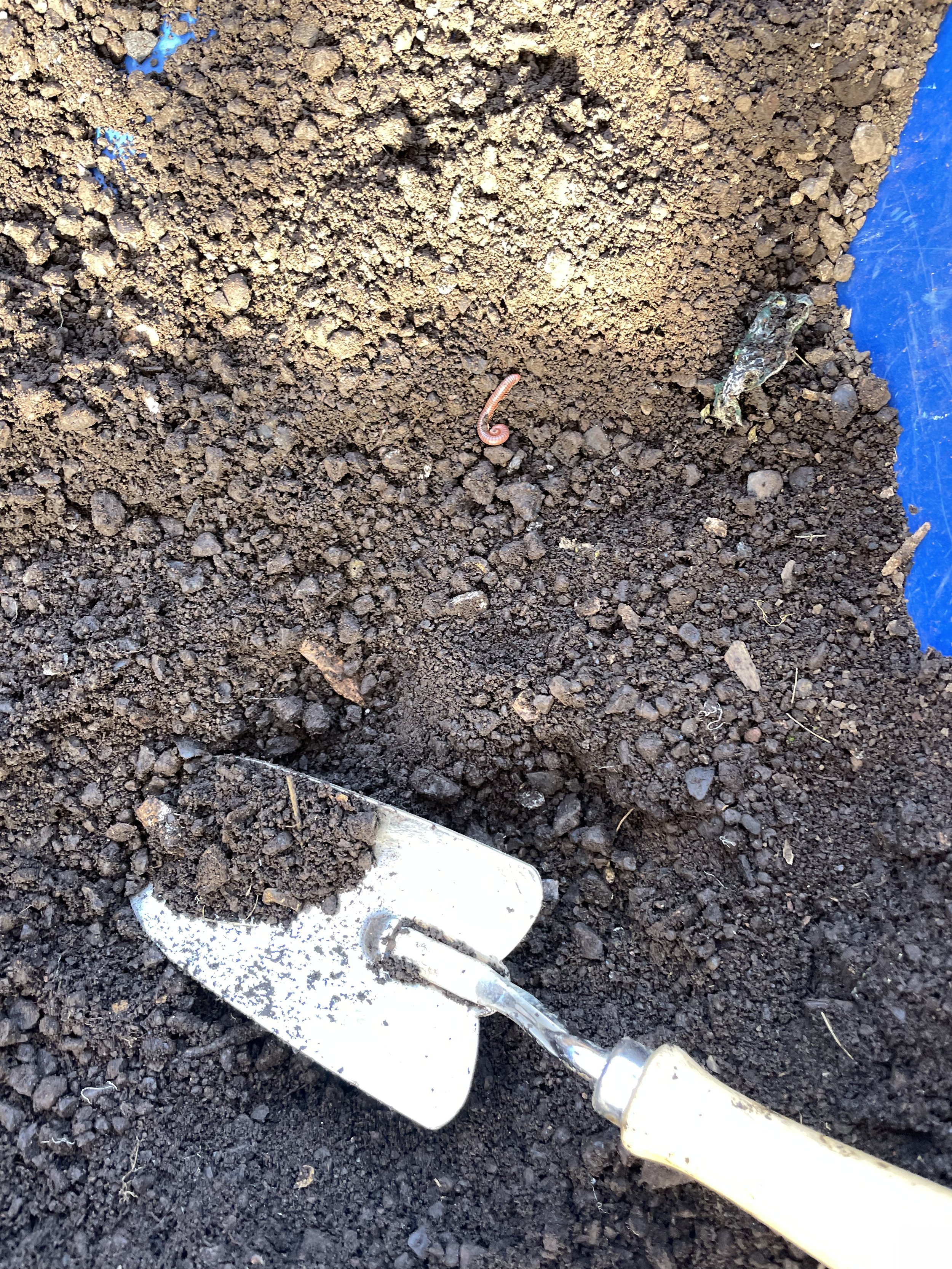
Where did that fear come from, as you may ask. I grew up in a plant nursery. Our house was surrounded by dirt and plants. I grew up seeing worms randomly pop up somewhere. You’d be surprised, I never got over it till now. My brother or whoever is around, would always pick it up for me. Even a snake statue gives me chills & could take the life out of me. With that fear in mind, I knew I didn’t want to be in a farm or work in the garden. I just didn’t see myself dealing with these creatures. Mind you, I can stare at a cockroach or a spider or almost aaaaaaanything. It’s just this type of animal that I can’t stand.
With that said, I couldn't believe that here I am now, calmly coexisting with worms, while crushing centipedes with rocks. Who would’ve thought! My profession leads me towards the coffee producers & I mean yea…… I guess…… My love for coffee is the only thing that will force me to get over that phobia. *facepalm*
Slinging shots for your producer

On a Saturday morning, me and my Bestfriend drove down south of Kona to the bakery, and realized... damn we were early! There was a cafe open across the street, so I thought, we could give it a try.
As we walked in the coffee shop, it has that modern vibe, accentuated with wood. They used a La Marzocco machine, and the whole cafe was simplistic, yet well thought of. It's very seldom that I see these types of coffee shop in Kona.
I fell in line, and there was a guy who commented on me being in awe and taking photos, saying "later on, it will be on Instagram", and I just praised how it really looked!
He explained that some wood were taken out from benches from other schools, and the process of remodeling the building.
Then, he called out his friend at the back of the line, asking if he wants to order with him. He commented as he walked up front about the remodeling. And then, one way or another, I mentioned I worked in a coffee farm, and I love how they reuse stuff. And then, he mentioned "oh nice. I own the coffee farm that sells the beans that they use".
With that, I realize what a cool coincidence that the producer is buying coffee from the cafe he supplies his coffee to. In my thoughts, well it's nice for this guy to have a shop that can best represent his work, and that he supports, even.
The coffee chain is brought closer that way, and I just realize that the shop has given justice with the producer's product. That's a goal I want to achieve.
I honestly love seeing the coffee chain work closely & supporting each other. There is immediate feedback, less carbon footprint, the teamwork is there, and there's no closest way to this than having the producer as your customer. If I were the barista though, I’d brag about about slinging that espresso shot for the producer.
Repetition creates deeper understanding
Repetitive jobs, at times are often seen as the boring ones.
Being in my early 20's, I understand that the younger minds tend to struggle on staying focused, but as a marathoner at 18 years old, I've learned how to develop this really quickly, and since then, I've applied it in certain aspects of my life & ofcourse, coffee.
The type of learning that can't ever be translated enough in videos, blogs, or stories, from people who has never gone through the experience of actually doing it. I can have as many resources out there, but will it really be retained in my mind as I create action & conscious decisions in my future business?
I think about this as I've been pulling shoots from the coffee trees. All the simple repetitive tasks keep piling up. Every time I do the task again and again, I see the purpose & value of why everything I do, no matter how small, matters.
Can't be surface leveled. Showing up everyday is a big step to my goal. I'm definitely in that rabbit hole.
She is my mentor
Her name is Maria. She is the farm manager of the current farm I work for, UCC Hawaii. She’s had the position for 20 years. Took me quick enough to find someone like her. I rent a room in her place too.
Prior to working full time in UCC, I started off as part time picker.
I wanted to leave my previous farm so badly, so I was looking for field maintenance work. At that time I showed up in UCC’s office. Maria said that if I want to work there, I had to start as a picker. The only experience I had in picking at that time was on my days off that I’d voluntarily pick cherries in the previous farm, making 30lbs the most. I was hesitant to say yes quickly, but I immediately recognized the sternness in her voice like she carries herself as a teacher. I asked if I can work 2 days a week and they were fine with it. They gave me papers to sign, then after a week, I returned it, and started. I won’t ever forget the time that Beny, the person in charge of finance, told me that they didn't think I’ll ever come back.
Many things happened in between but after 3 months of working part time, I finally decided to work full time with Maria. Now, more than ever, living my life in Hawaii finally makes sense. More than validating the way I think, she strives to always improve everything. Her focus and determination on the job makes me want to keep up with the amount of experience she has in coffee. She has the strongest mindset and the kindest heart. Finding a person with those characteristics, and a deep knowledge/understanding in coffee farming is absolutely rare to find. I learn about farm life too, reducing waste and some common sense on skills I’ve never touched base on.
Her strength reminds me of my mom and my grandmother’s. I am one stubborn individual who takes on, on these women in my life. Don’t get me wrong. I love them. The advise they give on my career is just sometimes irrelevant because I’m the only one who took a profession in coffee. However, with all questions and guidance I have right now, I will listen to Maria. I recognize her value in my life and I know that in this aspect of coffee, more than being my boss, she is my mentor.
Living a life I aim to live forever
Kona, Hawaii. The current home base. After 7 months of living on the island, having to transfer to another farm, establishing a healthy routine, I can say that I would absolutely love to live this way. This is the healthiest I've lived in my entire life! The farm I live at is abundant with fruit trees, such as avocados, papayas, oranges, seasonal fruits, bananas, edible flowers, and many more. Maria, my farm manager / housemate has free range chickens that give eggs too, so we never have to buy! I work 8 hour shifts, 5 days a week doing labor intensive work in a coffee farm, and on my 2 days off, I do long runs. I see my running as training for work, and work as training to build strength and endurance. In terms of growth, I found the mentor in coffee farming that justifies my reason for moving here!
I love it because I don't even have to try so hard. I got everything I need. It's like this life is just where the shoe fits. I have goals that I want to achieve, but this current feeling makes me think, "How could I ask for more?".
I don't live beyond my means. I had to adjust things I'll willingly spend on. The minimalist approach in life has definitely helped. Focusing on things that only really matter. I maximize my resources too. This is good. I'm having a better understanding of sustainability by living my life around it.
Do we need two ways to grade coffee?

It never bothered me when I started working in a Kona Coffee Shop in Texas, when we’d sell Extra Fancy & Peaberry as pour over on the menu, but learning Specialty Coffee in the Kona region itself urged these thoughts of mine.
Let me explain how coffee grading in Kona works.
When people say 100% Kona Coffee, it has to be certified. There are certain qualifications in bean size, amount of defect, and it must be grown in a specific range of the Kona region. The farm where I work at gets the seal of approval from the dry mill.
After this, from highest to lowest, there’s the Extra Fancy, Fancy, Kona #1, Kona Select, and Prime. Amount of defects increase as it goes lower.
I recently attended an SCA class on Sensory and had an idea of how to identify specialty coffee. These are coffees that have less than 5 defect in 300g, 0 to 1 defect when grading green coffee & a cupping score of 80 and above. Cause of unpleasant taste may be from defect, bug damage, past crop or improper storage. I’m still slowly trying to wrap my head on this type of grading and the definition of Specialty Coffee is still evolving as they include the producer’s side into the equation.
I’m also really trying to understand my question here. I’ve wondered if the size of the bean matters when the coffee has very little defect, and has been processed in a way that results meet the SCA graded standards. I wonder if using bean size is fair to grade what’s quality. What if the farm has a variety that naturally produces larger beans, (for example: Maragogipe, identified as “Big Bean”) and then there’s the Guatemala Typica variety that is more prominently produced by farms from the Kona region. I simply can’t understand if having two grades benefits the consumer and producer side
I don’t think it helps in the consumer’s understanding of quality coffee. Here’s why. At the end of the process, when coffee is brewed, flavor is the main thing that will speak for the process, if it’s quality or not. A bag of coffee can have the extra fancy size but can be full of defects. Do these tourists even know if a seal of approval exists? A bag of coffee can also be Kona Prime (3 steps lower from the biggest bean) but can be processed correctly and have no defect.
In producer’s perspective, this is where the green bean quality starts. If coffee ripened quickly because of the weather during that season, is it considered their fault? Is it their fault that it didn’t grow big enough? But the coffee is clean from mold, has been kept away from the Coffee Bore Beetle, has been stored correctly and passed specialty, but is still labeled by what its size is.
The thing that makes me wonder if the size to determine a coffee quality really matters! This simply confuses the consumer, by identifying what really is important in producing a cup. It’s also because I know that as I work in the. producer’s side, I can cheat a system like that. I know how to find a loophole. I know that if I see it, people have already done it.
Last thing that makes me wonder if having the Kona grading system helps the industry as a whole, or does it add a barrier to make them highly distinct from other coffee producing regions.
Apr 18
Maybe yes.
I keep coming back to this question. Maybe we need two ways to grade coffee because Specialty coffee is not everyone’s niche.
Not everyone drinks coffee because of the flavor, nor does everyone drink it black. Coffee is seen as a caffeine source, or even a comforting flavored/creamy drink. So, there’s no sense in putting up a particularly processed/ fermented/ rare variety/ roasted to perfection coffee on a latte.
It’s only very recent that this beverage is seen as Specialty, as it was presented as a bitter, energizing drink when brought to the market. It’s been so available everywhere, that it became a lifestyle for many parts of the world. The Specialty coffee sector is still so young.
And then I realize, coffee is simply enjoyed differently. Some enjoy it as a commodity & some, as specialty. Farms will also have to realize which market are they for, thus having goals for what to achieve on either. So yea, maybe we do need two ways to grade coffee…
Pandemic, Inflation & Wages
As I write this blog, I assess everything that makes me worry right now. How will my salary be enough to help me live and to help me grow in my career? What a time to start a profession in coffee! From finding a career when no coffee shop is open (2020), to having just enough money with inflation occurring (2022). Can I just say that I live in Kona too? Gas is ridiculously expensive! From $4 last month to $5.49 this month. The post pandemic effect, and an occurring war in Ukraine.
To help sustain the lives of the workers, shouldn't we be increasing coffee prices too? Maybe do a market adjustment with wages? Do we need to wait for every other coffee farm to do it? Can we take the lead? I wonder. After all, fertilizer is times two in prices already! A raise can only compensate for so much during this time, but it doesn't count as a reward for what one is trying to earn.
4 hrs after I write this blog to myself, the farm I work for, just released an announcement of increasing the coffee prices. Our minds are quite in sync!
Organic is Sustainable
… but is it really? Two words that are too broad, even for this topic. This statement had me thinking so deeply, that I wanted to protest. I didn’t. I couldn’t. I’m not putting up a fight when there’s arrogance involved. A point can’t come across when organic is seen like a religion.
We would have to narrow this down. Put this in coffee farming context. I, for one is a big advocate for sustainability. It has been 5 years since I’ve decided to make conscious decisions with waste. Years after that, I found interest in immersing myself into the coffee industry, thus putting these two concepts together. A sustainable coffee business.
With a shallow standard for my thoughts, I’ve been accumulating ideas on how to reduce waste. Learning the barista/consumer side of coffee helped me give some more insight on how to make realistic decisions. To be exact, I have a list of these in this blog too! However, as I got into coffee farming, I’ve seen a bigger picture on what sustainability really is.
For me, sustainability is to make use of resources efficiently. Resources including environment, labor, time & money. Decisions on how a business can sustain itself with what they have. There are only factors that we can control and only so much that we can’t. The question is, how can we work our way around it?
As we know, the producer’s side of coffee can be the most difficult, unacknowledged and misjudged community of the coffee chain. Producers have to deal with the environment, & has been directly affected by climate change. In addition to these, more diseases such as coffee leaf rust, & coffee bore beetle have been affecting the crop. The current to post pandemic stage caused shortage of people all over the world. People have been more lazy! I can’t blame them though. Why work in a labor intensive work environment such as a farm who is tight on budget, when Target offers a competitive pay? I currently live in Kona. A coffee region in Hawaii with the highest cost of living, & labor laws that bring coffee prices up to one of the highest range that is even beyond my budget. And to top it off, you have consumers who know little about the process and demands “Organic”.
Organic is a label that’s been more active in this current time. We see it in groceries everywhere (maybe excluding Walmart). It matters to those who are more conscious with what they eat and where it is sourced. GMOs have been around because there’s so much demand, not much supply, and chemicals are introduced. It can get ridiculous how this can be abused by large scale companies too. For those who go against this, we also have those people who abuse the alternative of these chemically produced products by putting a label. Resulting to the term “Organic” becoming a marketing tool.
In the coffee farm, we spray weed killers around the tree, put fertilizer, spray for fire ants, CBB (coffee bore beetle) and CLR (coffee leaf rust). We spray around the tree to prevent weeds and vines from growing on the tree. With limited labor, weed-whacking around trees on a 32 acre farm is putting the burden on your people. Not spraying on leaves will cause disease on your trees, defective crop, and discomfort to the pickers. Fire ants burn like hell.
With some of these factors, how do we expect to go organic and have products to sell? How can organic be sustainable when farmers lose their farms because the trees haven’t been treated and sprayed? How can organic be sustainable when you expect people to do a labor intensive job while not paying them enough? Can you sustain a farm without having workers? Can you even keep the trees and produce crop to sell when diseases have taken over?
I speak because I empathize. I consume coffee, AND I work in coffee. I am a consumer, AND a producer. Understanding both aspects brings me to wonder why there are so many ignorant people. The sad thing is that some of those who speak for coffee are to blame. Bloggers, youtubers, baristas, and in my case, coffee farm tour guides too. Why do we lie about our product? Are we really knowledgable enough to promote “Organic”? Do we know what’s the cost of using this marketing tool and putting this type of pressure to producers, who is the heart of this chain? We have no product without these people.
Misinformation will only cause division. I’d rather educate than pretend. Let’s help each other. We can start by being honest to those who buy our product. There is no shame with speaking about the problems that we encounter. We can educate on how and why decisions like these must be made.
Now, I’m not saying that we should promote the use of chemicals. I do believe that there is a responsible way of dealing with it. However, if there are ways & suggestions to have little to no harm in the environment, we should also consider. Till then, I hope we include the people who work in the industry when we speak of organic and sustainability, because right now, I can’t say that “organic” can sustain the livelihood of our farmers.
Additional information: The farm that I work at only use chemicals that are approved for coffee farming.
A year of progress
2022 has started, and I wasn’t even able to reflect on what I’ve done for the past 365 days. Jeez! Tasks have just been piling up, my checklist is full and well… we just keep working! Okay. So, how was 2021 like?
Recap:
Jan ‘21 - Sep ‘21, Barista at Kona Reserve Coffee. I learned so many things in latte art, Great improvement with working as a team behind bars, and learned how to communicate a beverage to a guest. A time where I had to resign and move on to make progress in coffee, and to answer more questions I had in mind. It was a really sad decision to go, and I’m glad I kept a good relationship with everyone (including the owner), but I knew that I had to keep going and to keep learning.
Sep ‘21- Dec ‘21, Moved to Hawaii in a coffee farm for a work stay program. Finally found visuals for what I’ve been trying to learn. Worked mostly in the field. This experience has and is currently opening my eyes to the challenges of coffee producers. Aha, and yes. The 3 month mark? It passed it. I have to stay because there’s still so much to do!
As for my extra curricular activities?
Well, this website has been finally launched, I’ve made a couple of coffee reels on instagram, made a couple of YouTube videos during the first half of the year and have been learning sensory through a kit that was lent to me.
That’s all of the general coffee things I’ve had! In addition to this, I look back at the past year sometimes and realize that I’m in a good place. I am proud of myself in that sense. Why? Well, I never thought that I’d find people as passionate as I am, never thought I’d be connected to people who has been in the industry for years, and never thought that I’d be in a place that highly values my persistence to learn about coffee, be very supportive of what I do & listens to my opinions.
… people say I move too fast, there’s no time to waste, but why am I rushing?
(the mind can be very conflicting sometimes)
Despite the mind arguments, I am grateful to be where I am, and I’m excited to build more bridges in the next year! We got this.
The Idealist says, “Only pick red”

Picking cherries at UCC
I go back to who I was about a month ago. I’ve always gone against the rule that if it’s ombre orange to red, you can take the cherry. The reason that it will be rotten, the next time they do the next round on that section is just not enough for me. I’d say, it still isn’t the ripe color, so why take it?
(I currently work in 2 farms) One reason why I wanted to work in an established farm is to see how they do things, why, and learn from how smooth their operations are. When I got to UCC, I knew they had standards. It is a Japanese company, and I trust how the Japanese culture is meticulous with what they do.
Maria is the farm manager, and she told me to start learning with picking and so that’s where I’m currently at. She showed me how to pick, how to use the hook, take dried cherries, remove leaves or sticks from basket, or any green that falls and to only pick red.
I love that she asks me of that, because I am very strict with the color difference of when it’s orange, red-orange, red or burgundy. So then on my first day picking, I decided to just take all the red or burgundy from the trees. I filled 3/5 of the burlap sack for that 8hr shift. I was so slow but it’s okay cause I either get $11 / hr or .85/lb, whichever’s higher. Eh. I really didn’t care about the money.
The next day, I picked again and Maria told me to take even the orange and ombre red - orange. She gave me the reason that my first farm gave, (which I can now fully accept). The conditions were: 1. If it’s soft and easy to squeeze, it will go through the pulper, 2. If the skin comes off when taken from the stem, it’s ripe enough.
I found an article regarding picking this color range and it said that the differences of the color of ripeness also gives a good character in the end. I also realized that labor is very low, we don’t have much pickers and so we have to take advantage of every day that they come to pick on the farm. It will be hard to find pickers who are meticulous with color, even so when they get paid by the pound in most farms. Lastly, we need to find a sustainable way of keeping up with the coffee production even on large scale.
I still believe though that the idealist view of picking only red can still be done on micro-lots. This can be done with full control. I’d honestly want to try having a section of trees in which I’d personally pick.
However, we must assess what the farm looks like, resources, and goals, before we judge their practices. I could still see some wrong in picking, but since I’ve been doing the job for a while, I was able to understand why we do what we do & make only reasonable changes.
A Cherry Picker’s story
I’ve been working at UCC for a month now, and I’ve been well fed. It’s not part of the agreement though but every time I pick cherries, there’s this one picker who always gives me food. (Not complaining) Her name’s Tamayo.
Today, while I was picking, Tamayo approached me and gave me coffee flavored candy. As breaktime approached, I gave her a pack of trail mix, then we simply sat down by the coffee trees, and we got around her story.
Tamayo is almost 80 years old. She has picked years ago and is on her 2nd year of picking on this farm. She’s worked in multiple jobs in maintenance or food service before.
When she worked in Walmart, she was in charge of maintenance. She told me she’d bring out loaves of bread, spread, a tub of ice cream and water for whoever’s in the staff space. The older people would question why she’d spend money on them. She said, everybody works hard and they deserve it. The reason why she had to leave was because of Debbie, the manager. When Debbie wanted Tamayo to be in her team, Tamayo declined. She said that no one in that crew smiles or says “good morning”, and she didn’t want to be in a work space like that. That’s how she got fired..
The next one was in a restaurant. It was Father’s Day. Now, Tamayo would always have candy with her. She’d buy all candies on one of the convenience stores every week or two. It’s like she’s always ready to give whenever, or wherever. On this day, the restaurant was packed and she decided to give one candy to every person in that restaurant. One of the crews went and scolded her infront of all the people, saying “Tamayo, how many times do we have to tell you to stop giving candies to the guests?!”, and that’s how she got fired.
Tamayo laughs as she reminisces on her past, but you could also see the sadness in her eyes. She explains to me that she loves to share because it makes her feel good. No matter how small it is, it can make a difference. She told me how her parents were the same, and that they never even swore.
Tamayo has cancer & is undergoing chemotherapy. Doctors tell her to rest but she thinks she’d die if she’d be stuck at her house. Atleast when she’s picking, she forgets.
Tamayo is one of those who moves me. She doesn’t have much but with whatever she has, she’s willing to share. The way she treats people, despite how cruel the world has been, also reminded me that we should never poison our souls for someone else’s shortcomings. Compassion and kindness should still live in everyone. .
So yea. I learned a lot from this woman. Thank you Tamayo for the story, beef jerky, candy and juice you gave me that afternoon :)
People will hate me and it’s okay
I thought about this while picking cherries today. I realize how my opinions are different, my beliefs and values are always against the current of mass thinking.
I also think to myself that it's okay.
It's okay that people will hate me because I know how to recognize a situation well, and assess it myself. People will hate me because I want to do things the right way and I have standards. People will hate me because, unless I could argue with myself about situations, I would stand by what I believe in.
It's part of the process though. I know that in order to fix things, get what I want, get rid of the sight of disappointment, I will be against people who will hate my guts & who I have to work with, despite the disagreement.
I don't really care because I build my opinions based on knowledge, and experience, to be credible enough to speak and educate. I know it sucks but either way, however I deal with things, people will still eventually hate me, and I can honestly say that it's okay.